

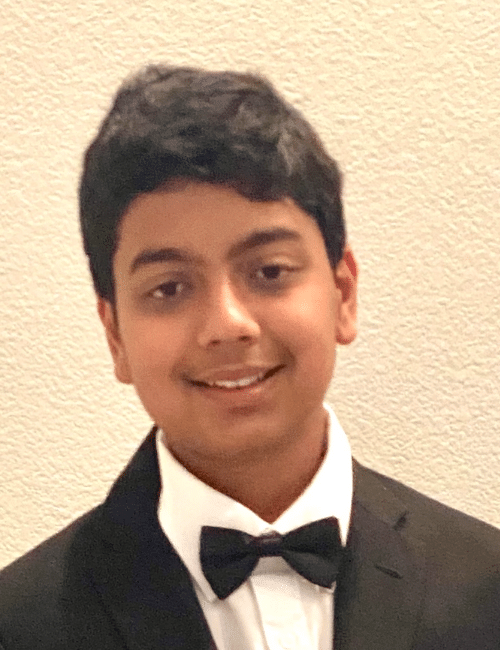

Dhruv KannanQuarry Lane SchoolClass of 2024Collaborated with a group of the world’s premier researchers, professors, and professionals in the fields of neuroscience and neuroethics.Synthesized new neuroscience knowledge into a proposal for cutting-edge neuroscience research.Engaged in interactive, cross-cultural activities and discussions about cognitive neuroscience and neuroethics through a biophysical lens.Learn more about Dhruv here.
Read more about Dhruv's achievements here.In the future, Dhruv aspires to study neuroscience at the University of California, Berkeley, and win an ABRSM French Horn Music Medal. He wishes to explore the intersection of neuroethics and law to create a more equitable and effective legal system. It is his dream to work for the Department of Justice to drive legal reform in the United States.A rising junior at The Quarry Lane School in Dublin, California, Dhruv is an Honors student and will be joining the International Baccalaureate (IB) Diploma program this Fall after completing AP courses in his freshman and sophomore years. He completed a Political theory course at the local community college as a sophomore through concurrent enrollment, and earned an A in the class. He has a deep interest in environmental affairs, and started his own fundraising initiative, Tree Shirts for All, in 2020. Dhruv was a 2022 Spring Fellow at Civics Unplugged, a program that dives deep into new technologies, systems and ideas that build the future of society. He will be participating in the Civics Unplugged Accelerator as a junior. Dhruv is deeply involved with his school's Speech and Debate team and interested in law and public policy.Dhruv is thrilled to have the opportunity to participate in the Advanced Medical Neuroscience Internship this summer. He relishes the opportunity to cultivate his interest in learning about neuroethics, with the hands-on nature of the internship.


My Research ProposalOur anticipated findings suggest that it is predicted that the participation in team sports and individual sports will have an increased level of affective empathy in children between the ages of 8 and 18. It is also anticipated that children who participate in team sports will have a higher level of affective empathy than both those who play individual sports and those who don’t, but the children who play an individual sport will still have an increased level of affective empathy.My research proposal hypothesized an answer to the question “To what extent does participation in team and individual sports impact the development of affective empathy in children between the ages of 8 and 18?”


My Research Proposal PresentationView my research proposal presentation here.At the conclusion of the internship, I presented my research proposal to a panel of judges including Dr. James Giordano, Dr. Sherry Loveless, Dr. Joseph DeFranco, and Eleanor Thompson.In the Advanced Medical Neuroscience Internship, I worked directly with some of the world’s leading brain scientists to learn about neuroethics, neurocognitive health, and revolutionary developments in the field.


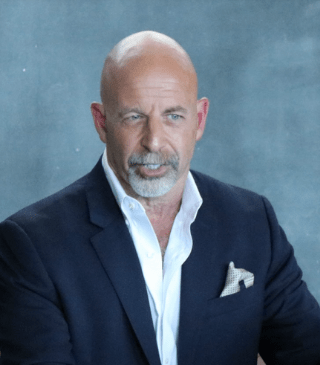
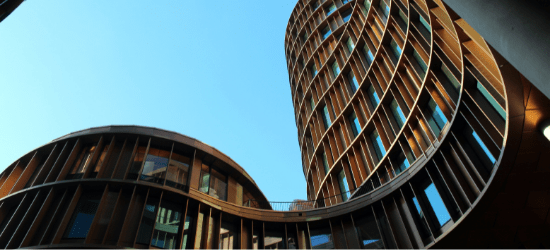
The Frontier of NeuroscienceDeep Brain StimulationI had the unique opportunity to speak with Dr. Michael Okun, founder of the University of Florida Movement Disorders Program.Within his work, Dr. Okun utilizes Deep Brain Stimulation (DBS), which operates like a pacemaker within the brain and is often inserted via conscious surgery.During surgery, electrodes are put in the brain to regulate electrical signals and help with conditions like Epilepsy, Parkinson’s Disease, Dystonia, Obsessive-Compulsive Disorder, and Essential Tremor.Pioneering NeuroaestheticsAs a pioneer of the field, Dr. Michael Heinrich, Professor and Dean of Students at Coburg University, was the perfect person to introduce us to the study of neuroaesthetics.This field aims to discover the universal laws underlying the finding of beauty and justify them through neurobiology. It is derived from foundational ideas of perceptual psychology, evolutionary biology, functional anatomy, cultural anthropology, and neurological methods.When applied to architecture, neuroaesthetics can facilitate the creation of built environments that promote the harmonious balance of all aspects of wellbeing.


Internship Highlights

Dr. James Giordano

The Creative Brain

Mind-Body Interventions

Experts & Mentors
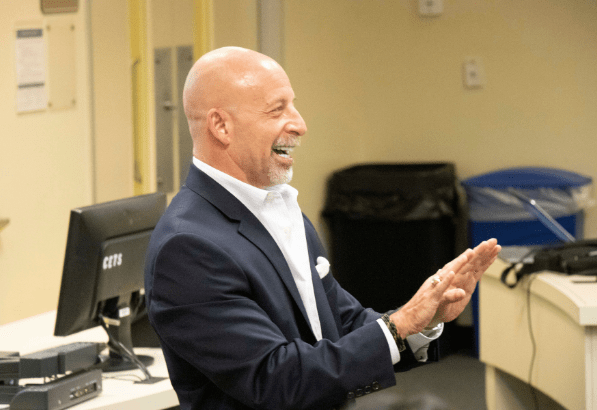
I had the chance to work and collaborate directly with Dr. James Giordano, Chief of Georgetown University’s Neuroethics Studies Program.

In addition to his involvement with a variety of educational institutions, Dr. Giordano is the author of over 350 publications in neuroscience and neuroethics.

During our first meeting, Dr. Giordano guided us through an exploration of our own brains, minds, and selves, probing for the problems, meanings, and questions within the world that surrounds us.

In subsequent meetings, Dr. Giordano frequently prompted both introspection and extrospection to encourage familiarity with the our own minds, as well as our environment, and how the two can interact to our benefit.
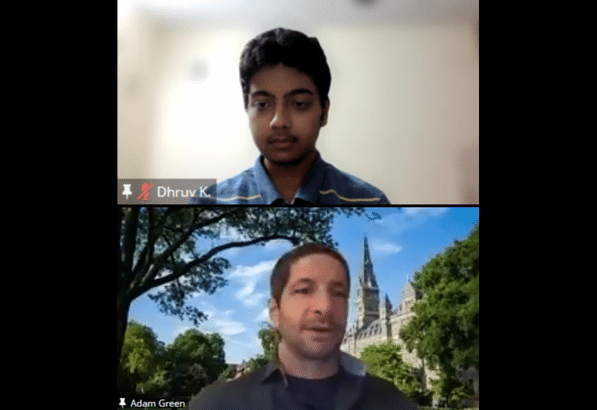
I had the opportunity to discuss stimulating creativity with brain science with Dr. Adam Green, the Director of the Lab for Relational Cognition at Georgetown University.

Dr. Green maintains that creative insights are “the product of connections made between things other people didn’t put together,” and we explored the neurological foundations of this theory.

In this sense, creativity becomes an exchange between connecting and disconnecting from memory, as memory is imperative to accessing a starting point and a frame of reference.

This disconnection allows people to generate a new path from the same beginning. One must be able to recognize what they currently know in order to stray from it.

Mind-Body Interventions are utilized for the treatment, wellness, and enhancement of the mind and brain. These interventions can be categorized into “low-tech” and “high-tech” mind-body Interventions.

“Low-tech” mind-body Interventions allow you to modify the interactions between the brain and mind through accessible and non-invasive techniques.

In contrast, “high-tech” mind-body Interventions are less accessible and can involve invasive procedures.

This new knowledge allowed me to assess the intersection between brain, mind, and body and how they can work together to improve the wellbeing of an individual.
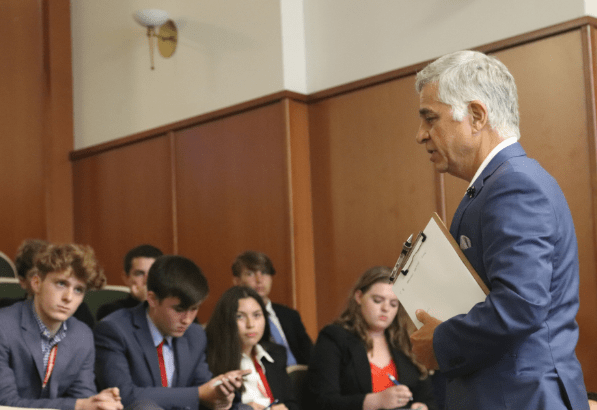
Along with Dr. Giordano, I had the opportunity to work closely with Dr. Justin Rossi, who taught us about the research proposal we would need to design and develop.

Dr. Rossi introduced us to the social, historical, and pathological understandings of what constitutes “normal,” as well as how we see spectrums and selection in the range of global health contexts.

In addition to Dr. Rossi, my team met directly with Carmine Carullo, former Planning and Performance Manager at ExxonMobil and current Manager of Medicine and Occupational Health, and Bill Stefan, a senior executive in the U.S. Federal Government.

Mr. Carullo and Mr. Stefan spoke of resilient leadership and how to adapt and endure in a wide array of high-pressure environments.