

Collaborated with a group of the world’s premier scientists, professors, and professionals in the fields of neuroscience and neuroethics.
Synthesized new neuroscience knowledge into a research proposal for a cutting-edge neuroscience experiment.
Engaged in interactive activities with discussions about cognitive neuroscience and neuroethics in a cross-cultural setting through a biophysical lens.
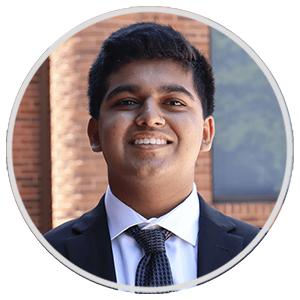
Isabella Galichia
Wichita Collegaite School
Class of 2024

Learn more about Isabella here.
Isabella Galichia is beyond thrilled to be apart of this year's Medical Neuroscience Internship. She is excited to be working amongst the top Neuroscientists in the country.
Isabella is a rising Junior at Wichita Collegiate School. She is on the varsity cheer team and varsity tennis team. She went to state for her work in both forensics and debate. Isabella loves to challenge herself with AP and other advanced courses. In addition, she placed second in state for HOSA this year.
Outside of the classroom, Isabella loves to volunteer at her local hospital. She runs rounds in the Surgical Nursing Unit and was able to make an impact during the pandemic. In the future, Isabella wants to find a career in Medicine and help make a difference in the world around her. In addition, Isabella competes in USTA tournaments and was top 5 in her region. She trained at the Chris Evert Academy for two years before moving back to Kansas. She aspires to one day play tennis in college.
Read more about Isabella's achievements here.

The Frontier of Neuroscience
Center for Functional and Molecular Imaging
The Center for Functional and Molecular Imaging (CFMI) at Georgetown is one of the world’s leading institutions with expertise in structural, functional, and brain imaging.
While visiting the CFMI, I met Dr. John VanMeter, Director of the Neuroimaging Corps at Georgetown University, who described to me the rationale, protocols, capabilities, and limitations of Functional Magnetic Resonance Imaging and tract tracing.
I not only learned about the science behind fMRI, but also had the opportunity to see the machine that possess a magnetic power of 30,000 times the strength of Earth’s magnetic field.
Neuromodulation
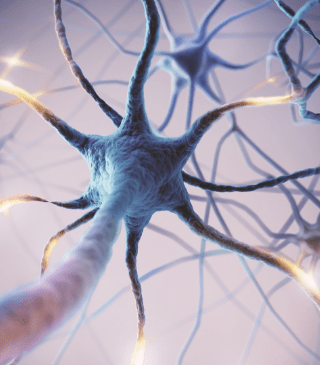
Neuromodulation is a technology that electrically stimulates nerves or chemically targets neurological sites to treat nearly any disease or symptom.
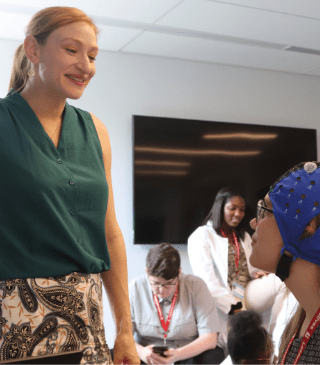
I specifically learned about the HALO device, an application of neuromodulation that provides external electrical stimulation through a helmet of electrodes. It is primarily used to improve cognitive function and wellbeing, like learning, memory, and performance.
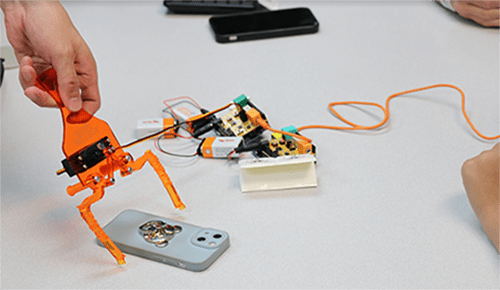
To further demonstrate the applications of neuromodulation, we learned aboutelectrical stimulation, perception of stimuli, and free will in order to control cockroaches from an iPhone.

Internship Highlights
Dr. James Giordano
Deep Brain Stimulation
The Creative Brain
Experts & Mentors
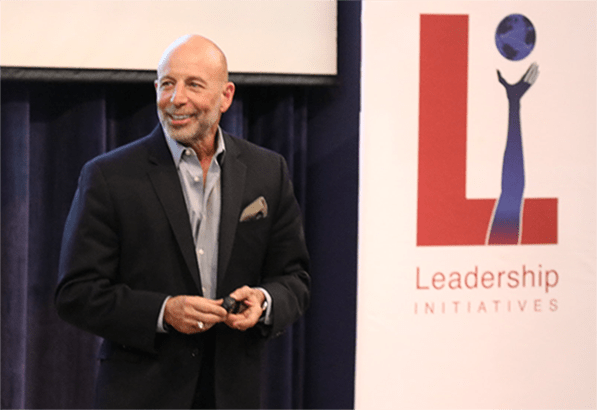
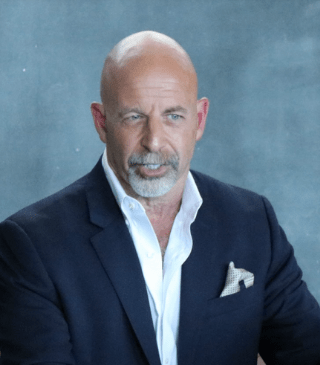
I had the chance to work and collaborate directly with Dr. James Giordano, Chief of Georgetown University’s Neuroethics Studies Program.
In addition to his involvement with a variety of educational institutions, Dr. Giordano is the author of over 350 publications in neuroscience and neuroethics.
During our first meeting, Dr. Giordano guided us through an exploration of our own brains, minds, and selves, probing for the problems, meanings, and questions within the world that surrounds us.
In subsequent meetings, Dr. Giordano frequently prompted both introspection and extrospection to encourage familiarity with the our own minds, as well as our environment, and how the two can interact to our benefit.
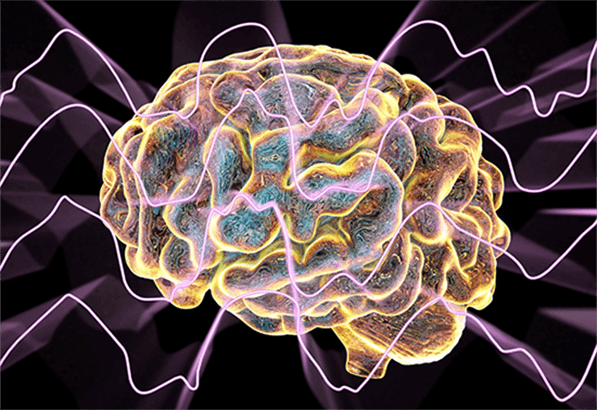
I had the unique opportunity to learn from Dr. Michael Okun, a neurologist, neuroscientist, and founder of the University of Florida’s Movement Disorders Program.
The university’s program aims to provide interdisciplinary and integrated care that facilitates communication between all members of their team to provide the best care possible.
Within his work, Dr. Okun utilizes Deep Brain Stimulation (DBS), which operates like a pacemaker within the brain and is often inserted via conscious surgery.
During this operation, electrodes are put in the brain to regulate electrical signals and help with conditions like Epilepsy, Parkinson’s Disease, Dystonia, Obsessive Compulsive Disorder, and Essential Tremor.

I had the opportunity to discuss stimulating creativity through brain science with Dr. Adam Green, the Director of the Lab for Relartional Cognition at Georgetown University.
Dr. Green maintains that creative insights are “the product of connections made between things other people didn’t put together,” and we explored the neurological foundations of this theory.
In one of his most prominent experiments, Dr. Green had participants draw the analogies to evaluate semantic distance and creativity as explained above, but also regarded the potential role of neuromodulation.
tDCS is transcranial direct current stimulation, which is a non-invasive "helmet" of sorts that allows for the modification of the neural pathways' firing in the brain. The external stimulator is placed on the scalp and then provides electrical stimulation to a broad region in order to control the neurons' firing.
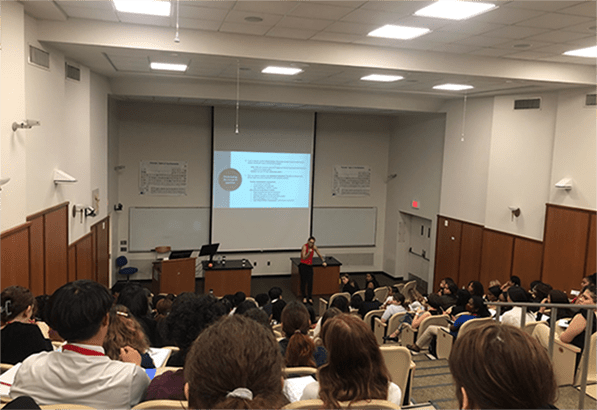
Along with Dr. Giordano, I had the opportunity to work closely with Dr. Rachel Wurzman, a Fellow with the Center for Neuroscience & Society and Postdoctoral Research Fellow in Neurology with the Laboratory of Neural Stimulation at the University of Pennsylvania.
Dr. Wurzman promoted us to think critically about the questions that help drive science forwards and improve our understanding of the world around us biopsychosocially. She also lent her expertise of neuroplasticity, neurodiversity, and neuroethics to help our team develop our research proposal.
In addition to our work with Dr. Wurzman, we had the opportunity to meet with a variety of neuroscientists with a variety of unique specialities.
One such professional was Dr. Bill Casebear, a Lieutenant Colonel in the US Air Force, who holds a joint PhD in cognitive science and philosophy. Dr. Casebear used his expertise to discuss using neuroscience to drive policy, public health, and social responses for global issues and generate sustainable peace