
CyberAmandaChen
Amanda Chen

My Cybersecurity Training



Business Partner Overview
Mary House
Quick Facts
Mary House is a nonprofit solely supported through grants and donations. Throughout the organization’s 42 years of service, they have served 700 families, providing affordable housing. Of the 700 families 99% have moved on from the organization, living in independent housing and being self-sufficient.
Through their education principals, Mary House has had a large success rate in not just early education enrollment, but also a 100% success rate in helping children meet grade level reading and math requirements through their after-school programs. Mary House has partnered with a variety of local organizations and businesses to provide any and all support families may need.

Mary House
About the Founder
Bill and Sharon Murphy have an extensive background in service work. Stemming from Bill’s missionary aid with homeless people in underserved communities and Sharon’s experience living in Eastern Detroit, they wanted to inspire and help others in need.
Bill decided to pause his educational career and instead of pursuing graduate school, he moved to Washington D.C. to become a full-time volunteer with the Zacchaeus Hospitality House for single men and women. He and Sharon both worked there for several years. Bill and Sharon both have experience serving on a transcontinental platform, working on war trauma teams that supported refugee camps in Bosnia. Through this mission with The National Organization of Victim Assistance, they saw a wider view of family crisis regarding displacement and resettlement.

Mary House
About the Business
In 1981, Bill and Sharon Murphy created Mary House out of their own homes, with the intention of helping those less fortunate in the communities around them. Taking inspiration from their service and international war trauma teams, the Murphys expanded Mary House into a private, non-government-funded, organization that owns and operates five different apartment complexes and aids in the resettlement of war-displaced families.
Mary House strives to aid immigrant and refugee families in their transition to the D.C. area by providing affordable housing. They are partnered with numerous other organizations to give families access to healthcare, food, legal assistance, and more. They hope to provide a stable and nurturing environment for low-income families and build programs aimed at supporting their long-term independence.

Mary House
Current Vulnerabilities
Our Cybersecurity concerns stem from our organization’s position with the people we serve leading to computer and server hacking, a lack of standard policies for AmeriCorps volunteers, and a lack of training.
Without the proper background, our staff cannot assist partner organizations such as schools and hospitals with the best form of computer practices. We are hoping to gain assistance on how to counteract these threats to ensure better protection.

My Security
Proposal
Our goals for our proposal were to address the main cyber security concerns of our partner business, as well as threats we identified through SWOT analysis and the CIA triad.
Our plan implements multiple cyber security protocols and solutions to protect our partners, such as Google Drive, Google Cloud Storage, and Google Cloud Armor to create stronger protection for the nonprofit’s data. We want to back up data to storage clouds to ensure that it does not get lost and limit the overall access employees have to the information to ensure the personal information is not compromised. This will be coupled with specific insurance policies that keep employees from interacting with files they do not need access to. /p>
Our proposal was successfully granted, allowing us to implement our solution for our non-profit. This will ensure that our partner is not at a high risk of physical threats, employee negligence, and hacktivists, protecting them for years to come.
My Security
Proposal
Presentation
During the Cybersecurity & Defense Internship, I worked with Beth Cerrone and Jamie Kreider to learn about the basics of cybersecurity, and potential career pathways within it.
Throughout the week, I worked with a nonprofit to develop cybersecurity solutions to protect against various cyber threats. I worked with my team to analyze the threats to the organization, and then developed a comprehensive solution. At the end of the week, I presented my cybersecurity solution to a panel of three judges and received grant money to implement the solution.
Internship Highlights
- Security Site Tours
- Nonprofit Partner Meeting
- Working With Experts
- Cybersecurity Labs

I was given the unique opportunity to take exclusive tours of multiple government and security sites to speak directly with security professionals. During these tours, I was able to witness first-hand how cybersecurity operates at the national and international level.
I was given the unique opportunity to attend an embassy where I received a briefing on cultural, economic, and international situations. We also got the opportunity to ask questions about the country’s cybersecurity infrastructure; therefore, allowing me to learn about cybersecurity at an international level.
We also toured the Department of Homeland Securities’ Cyber Crimes Center where we received classified tours of the cyber crimes unit of the DHS and learned how Homeland Security uses cyber intelligence to track major crimes such as drug smuggling, human trafficking, and major theft.
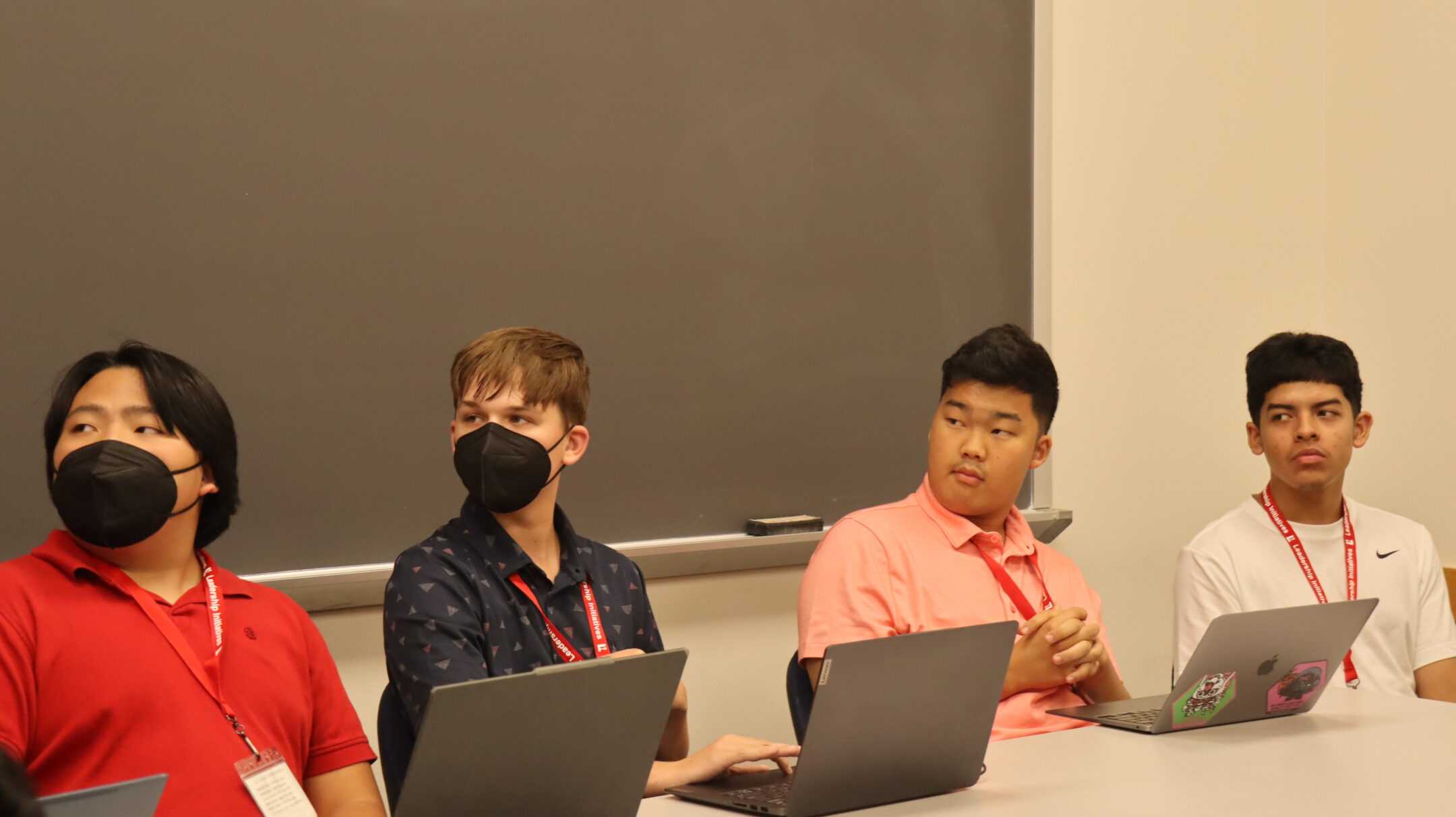
In order to apply the skills I learned throughout the internship, I worked directly with a nonprofit based in the Washington D.C. area to discuss their companies cybersecurity needs.
After three meetings where I walked through the organization model, protected information, and staff training of the nonprofit, I worked with my team to create a staff training protocol and threat analysis for my partner.
At the end of the internship, I advocated for, and received funding for, my nonprofit partner to implement the cybersecurity training protocols so they can best protect their client information and continue to develop with a reduced fear of cyber attacks and cybersecurity threats.
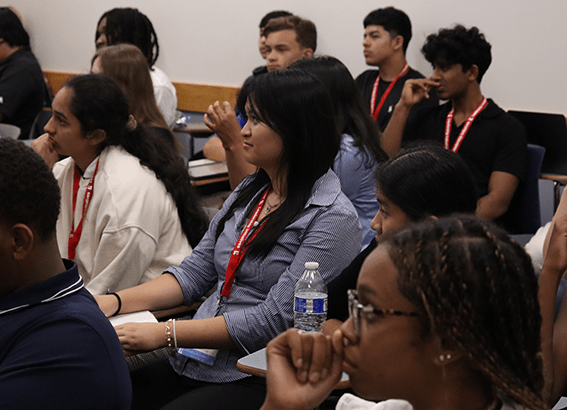
To learn more about the world of cybersecurity, I was given the unique opportunity to speak directly with cybersecurity experts from multiple different organizations and backgrounds.
I worked directly with one of the leading consultants in Cyber Threat Management, and a consultant for cyber policy for the National Counterintelligence Executive, Phuong Nguyen, to learn about common threat assessment and cybersecurity counterintelligence. I also heard from the global leader in Firewall Creation, David Balenson; the author of the most widely-regarded O’Reilly book on cybersecurity, Michael Collins; and the lead SME for the FutureG Initiative for the Department of Defense.
Throughout the internship, I also heard presentations from, and spoke with, representatives from the Department of Defense, Department of Homeland Security, and the National Security Agency. To learn the physical side of cybersecurity, we also had the unique opportunity to meet with globally-recognized penetration testers and network threat assessors.
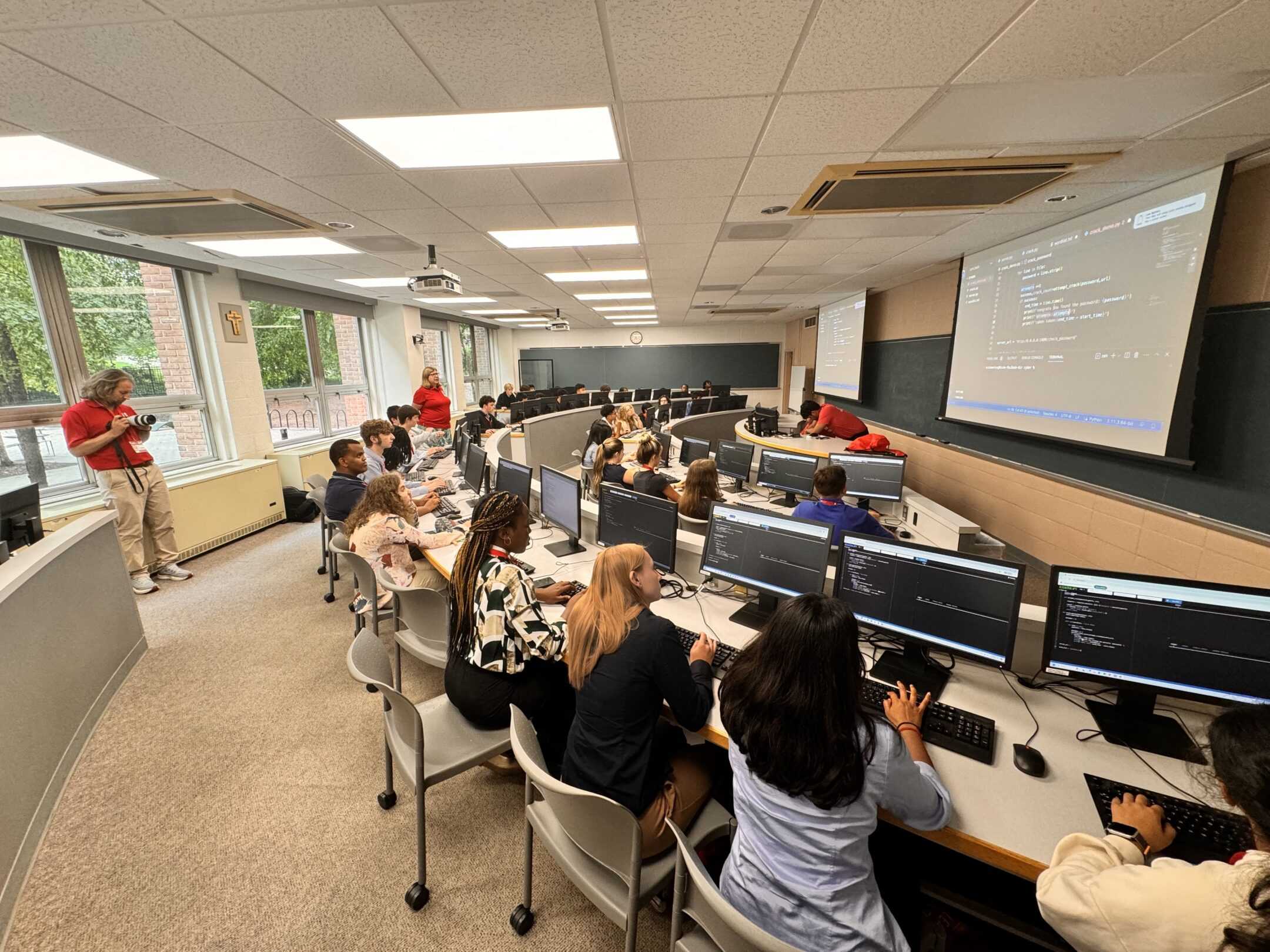
In order to put the skills we learned to the test, I had the unique opportunity to use a cybersecurity software used for graduate instructional courses to learn a myriad of cybersecurity skills.
Starting with network cybersecurity, I worked through labs dedicated to network security and linux to understand how networks communicate with each other and how cybersecurity poses a threat to this communication. I used these Linux skills to complete capture-the-flag coding competitions as well as virtual rooms.
At the end of the internship, I worked with an expert from a leading cybersecurity consulting firm to learn how to built ethernet cables. I used ethernet cord, crimpers, and wire strippers to produce functioning ethernet cables.