
NatsecColinHushon

Colin Hushon

My Security & Intelligence Training

My Security
Proposal
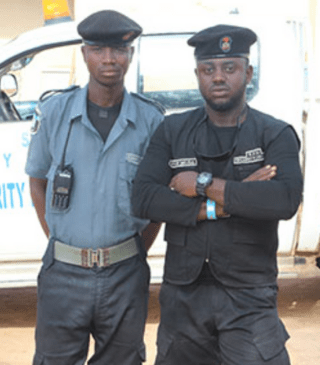
Our goals are to give the security team the skills and resources to be self-sufficient to protect the students, faculty, visitors, and facilities of Ramat Polytechnic University. This proposal will ensure that the university’s security system and security team can adjust to the situations and struggles that may transpire.
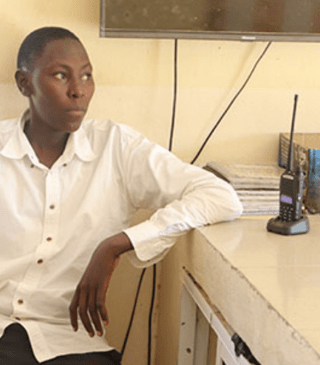
The purpose of our proposal is to guarantee the safety of everyone at Ramat Polytechnic University by creating a more effective communication system. This will be done by purchasing walkie-talkies, making sending information to other security members more efficient. We also plan to provide every security member with a whistle to alert other guards, students, and staff of possible attacks. Lastly, our team proposes the purchase of a hand-crank siren, which can be used to alert the overall campus of incoming dangers.
Faster communications will help address the students’ security and protection more efficiently. With the high threats, the security team must have a total handle on the situation to ensure that Ramat Polytechnic University is a safer place for everyone.
My Security
Proposal
Presentation
Leadership Initiatives is a 501(c)(3) nonprofit organization dedicated to creating future leaders globally through experiential learning.
In the National Security & Intelligence Internship, I worked directly with some of the world’s leading counterintelligence and counterterrorism experts to learn about national security and intelligence.
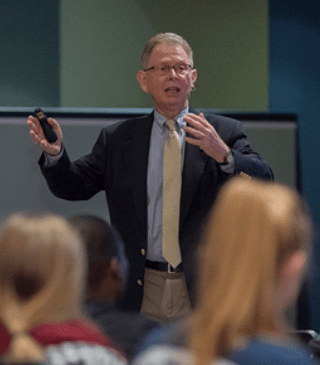
At the conclusion of the internship, I presented my security proposal to a distinguished panel of judges, which included Chris Fox, Lynn Clarke, and Umar Muhammad.
Firm Statistics
RAMAT PolyTech
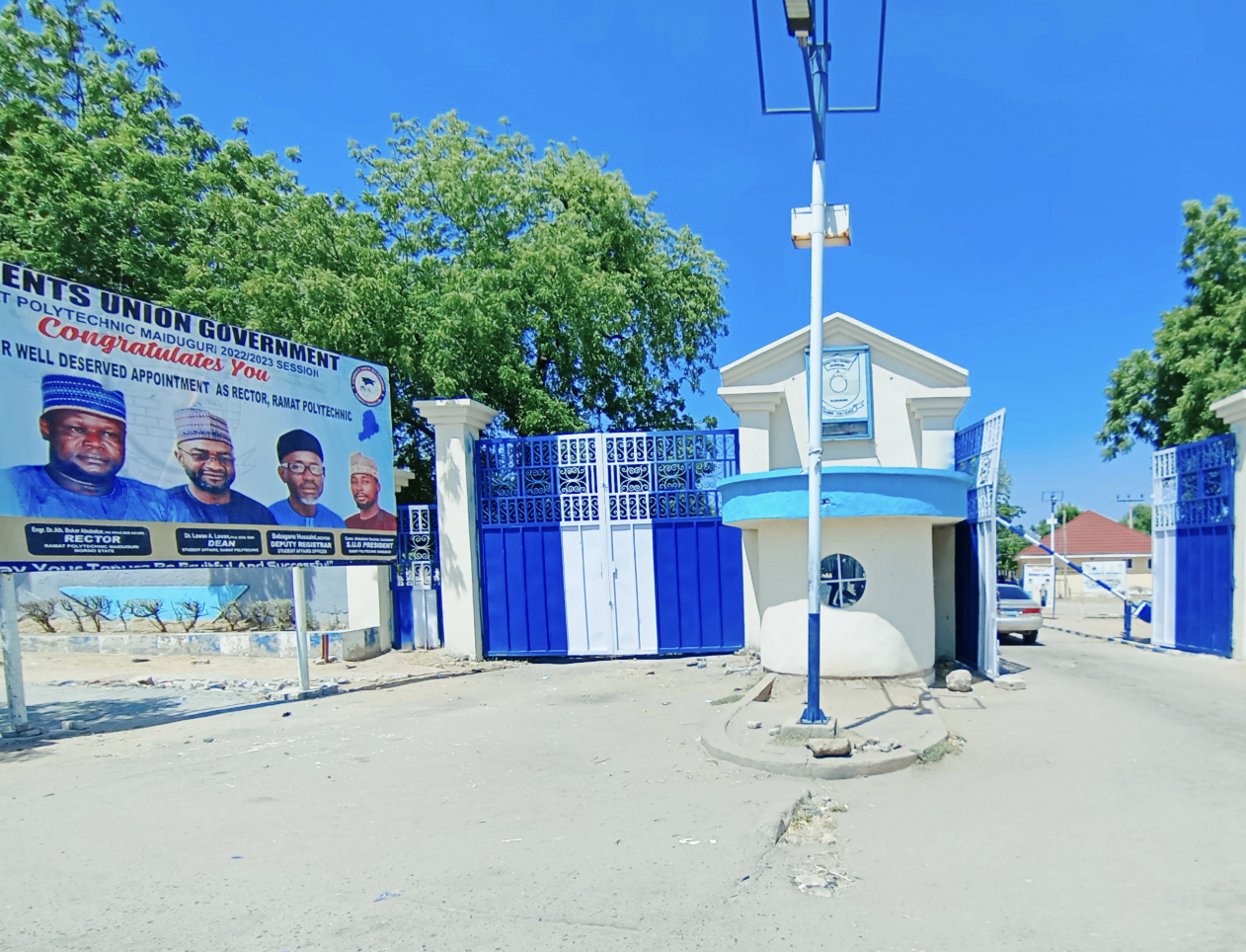
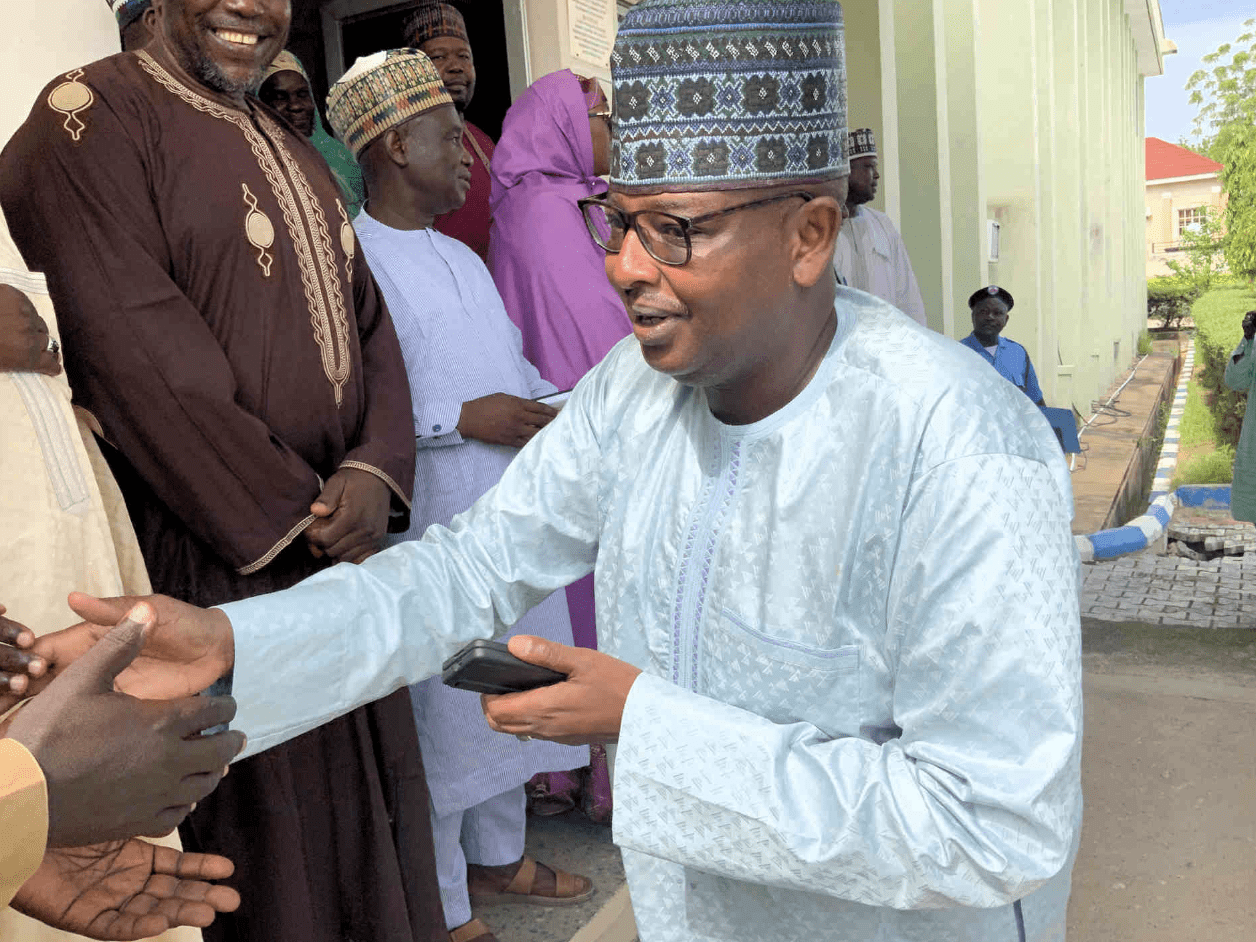
RAMAT Polytechnic University was established in 1973 and is located in Maiduguri, Nigeria.
The security department consists of 82 security guards responsible for patrolling the entire campus to keep intruders out and act as a deterrent for illegal activity.
RAMAT Polytechnic University has a total of six schools and roughly 54 departments, specializing in various fields of study.
The university currently has little backing and emergency resources on campus making the security department reliant on military aid resulting in delayed reaction.
About the Firm
RAMAT PolyTech
Boko Haram and education are intrinsically linked. In the local Hausa dialect, “Boko Haram” means “Western education is forbidden”.
As a government-sponsored entity, RAMAT Polytechnic University is a prime target for terror attacks. The school can be unsafe for students and employees, especially those who live on-site.
The university’s security department has become essential for ensuring the safety of the people who call RAMAT Polytechnic University home.
Poverty and resentment of Western culture have driven many students, clerics, and unemployed professionals to join Boko Haram’s cause.
Community Impact
RAMAT PolyTech
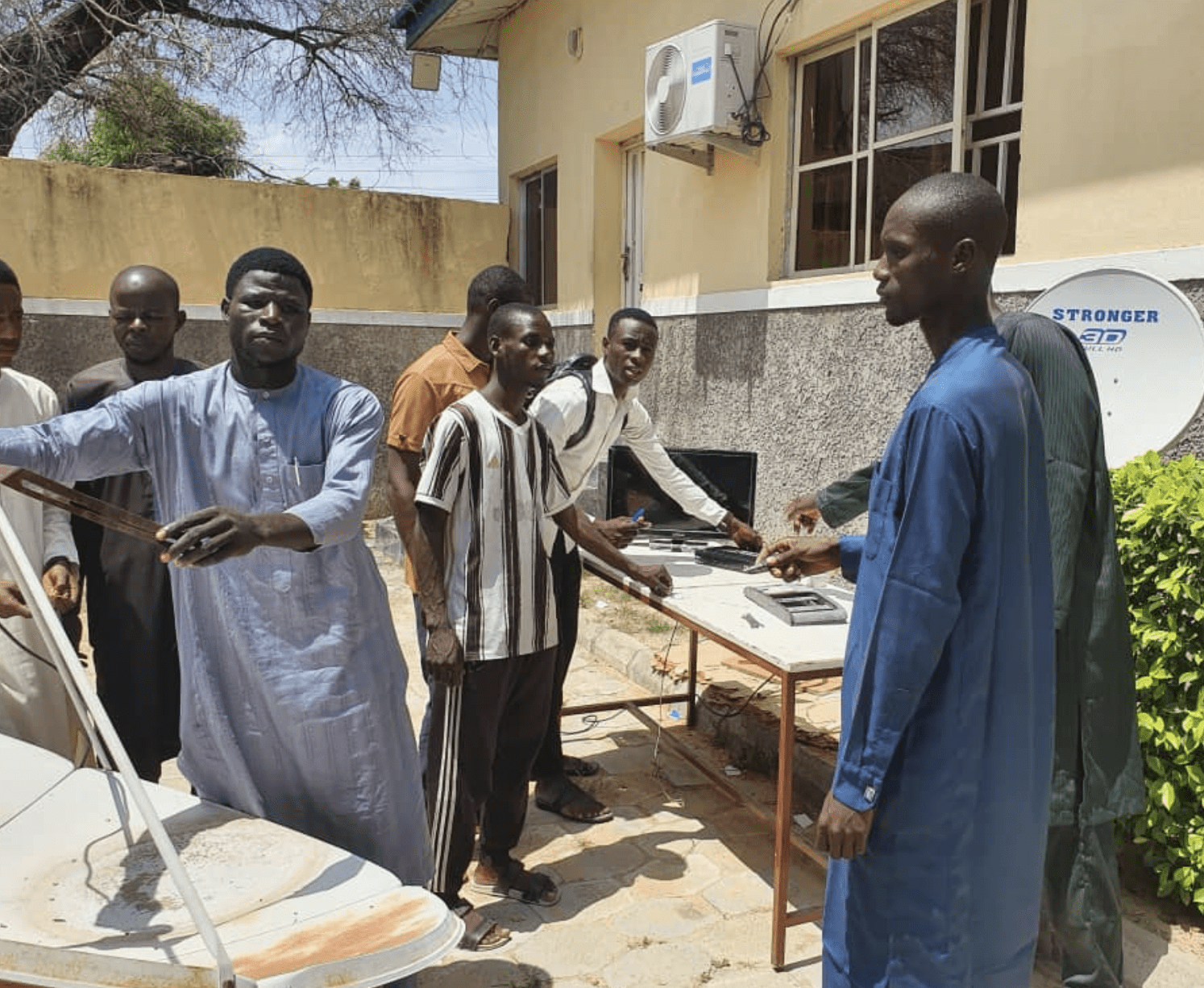
RAMAT Polytechnic University is in the heart of the city of Maiduguri. The university serves just over 10,000 students.
Due to COVID-19, the university has lost the income it generates through in-person sessions and has been forced to reduce its security department.
The fiscal reduction of the department leaves the school vulnerable to Boko Haram and affects the livelihood of hundreds of people.
Along with this financial hardship, the university has faced consistent problems of understaffing, a lack of security tools, and comprehensive training on counterterrorism.
Current Threats
RAMAT PolyTech
Within the last few years, there has been a spike in insurgent activity in Maiduguri.
In March of 2023, Boko Haram attacked the city of Maiduguri, where RAMAT Polytechnic is located, killing at least 33 people.
In addition to this, the security department has to combat various forms of theft by disgruntled ex-employees and students who wish to cause the university damage.
Boko Haram is taking advantage of this phenomenon and disguising themselves as a student to gain entrance to the university. A suspect was arrested for this very reason in April of 2021.
Terrorism in Nigeria
RAMAT PolyTech
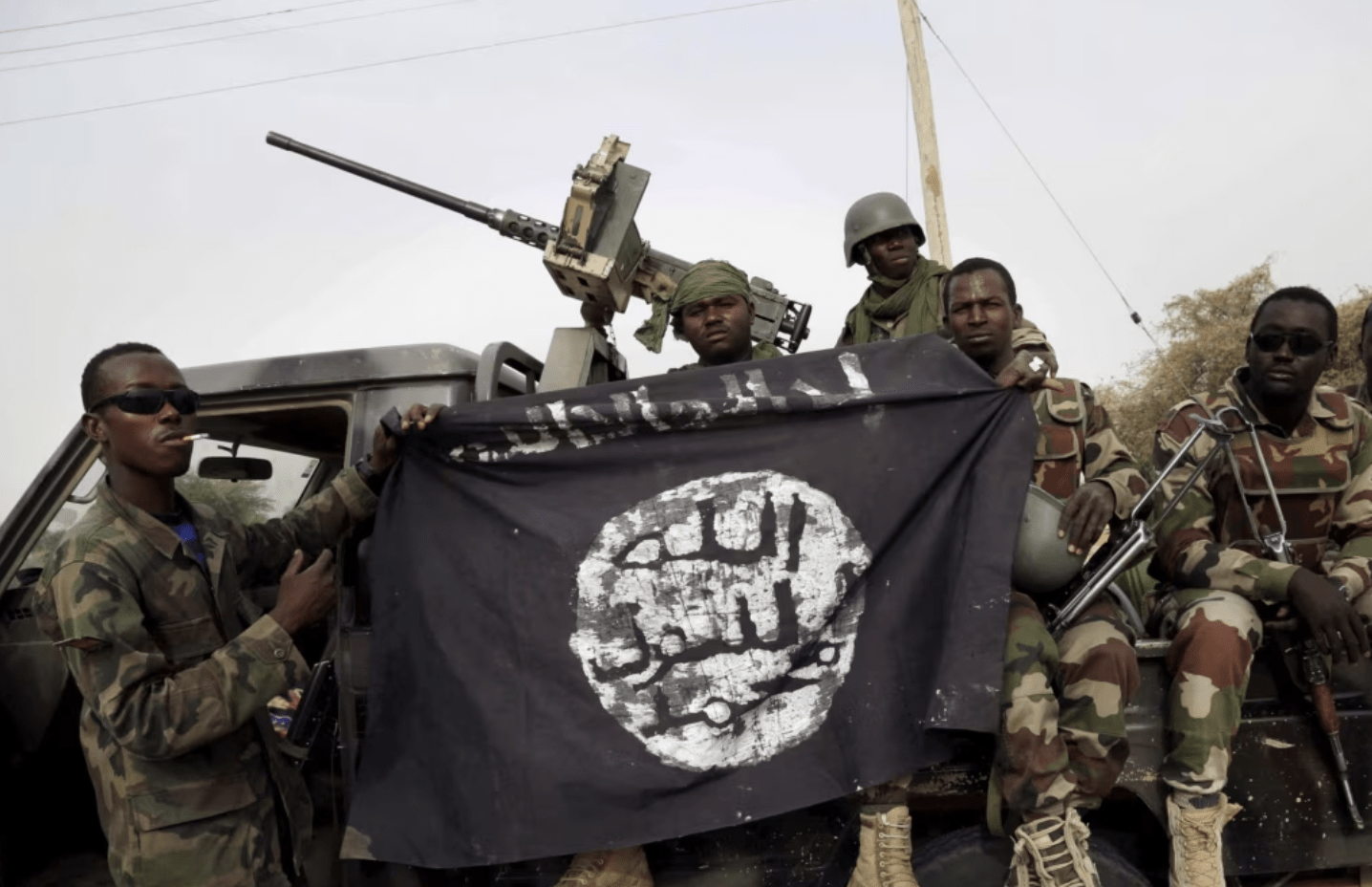
Boko Haram is a militant terrorist group that promotes anti-western education ideals and has been based in Northeastern Nigeria since 2002.
The terrorist organization’s main priority is establishing, spreading, and maintaining an Islamic State to oppose the Western values that threaten their ideology.
Though they have been active for over twenty years, they have gained most of their notoriety within this last decade by demonstrating their ability to carry out major acts of terrorism.
Most notably, in 2014, Boko Haram kidnapped 276 Chibok school girls. Over 100 of these girls remain missing to date.
Internship Highlights
- Meeting The Firm
- Security Mentors
- OPSEC
- Security Tours
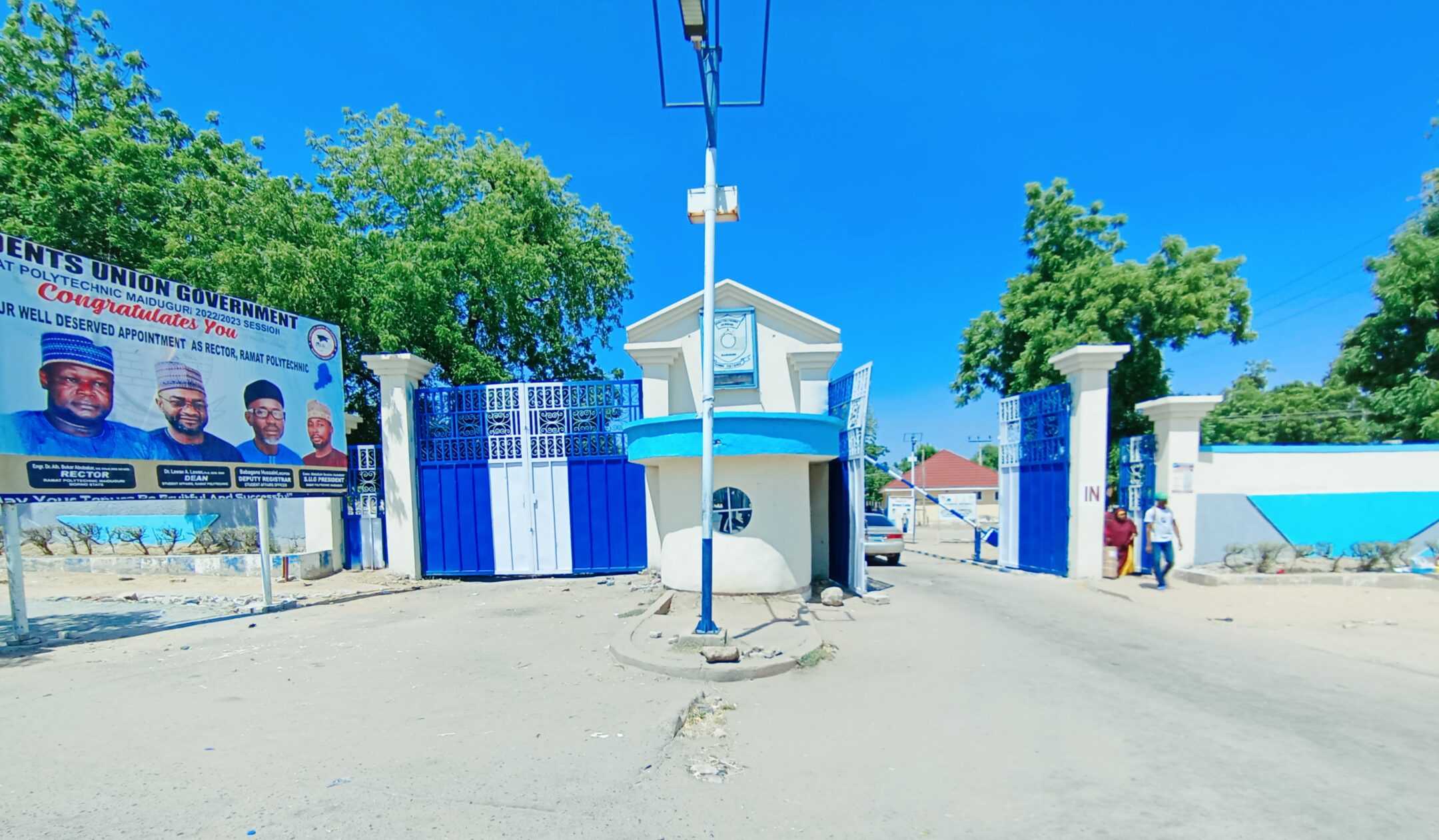
Our team began developing our solution by meeting the security company at RAMAT PolyTech University through a Skype meeting with the security guards.
Throughout the week, we had several calls with the security company. We discovered the threats faced by RAMAT PolyTech University, asked dozens of questions about the security situation, and learned about the university in the context of a wider security crisis in Borno State, Nigeria.
Once we compiled all the information, our team outlined security protocols for the security company through a SWOT analysis, which stands for “strengths, weaknesses, opportunities, and threats.”
Throughout our protocol-development process, we worked with staff at Leadership Initiatives in Nigeria, mentors, and national security experts in order to polish our proposal and final presentation.
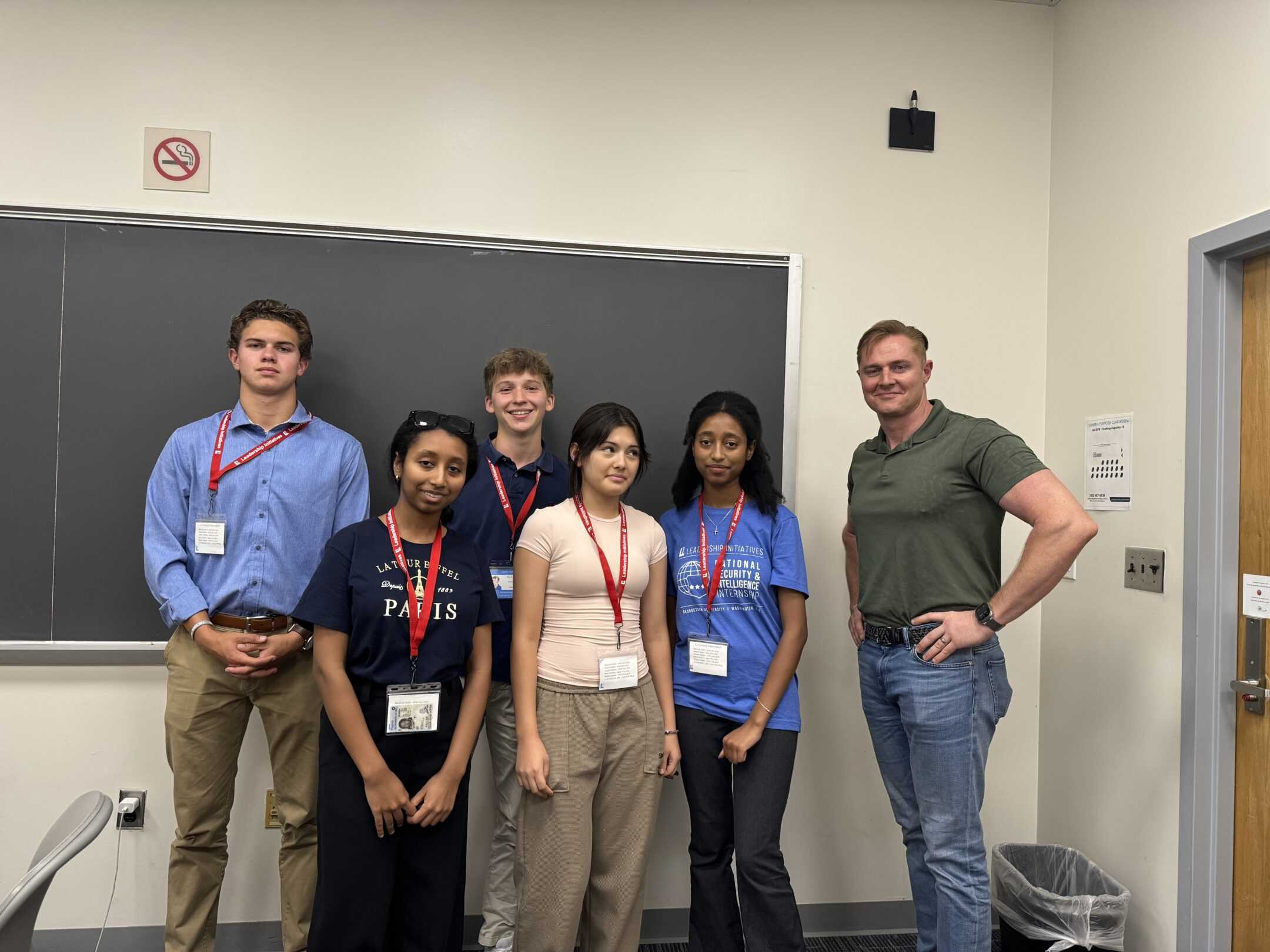
Throughout the course of the week, we met with various experts in national security and intelligence, including Gina Bennett, Rohin Sharma, Ellie Constantine, Bill Stefan, and Chris Fox.
Our mentors offered us insights on our projects every step of the way. We gained valuable knowledge in various areas in intelligence and counterintelligence, which in turn helped us prepare the best security protocols possible.
Besides consultation, we had the opportunity to learn about each mentor’s contribution to the safety of the nation and the field of national security itself. We asked them about the basics of the field, its future, and everything in between.

Throughout the internship we met with distinguished guest speakers including Gina Bennett, a respected Senior Anayst for the Central Intelligence Agency known for tracking Osama Bin Laden.
Ms. Bennett, as well as Rohin Sharma, a former military intelligence officer and instructor at Georgetown University, gave introductory lectures on intelligence. We also got to ask countless questions and learn about their paths into the world of national security.
We learned about the State Department from none other than members of the Embassy of Taiwan including their cultural, diplomatic, and education attaches.
We delved into the military side of national security with Ellie Constantine and Ariel Barredo where we learned about military operations and logistical planning. Through their mentorship and a panel representing various agencies of the government and military, we learned extensively about the role of the military in national security.
Lynne Clark’s lecture on the practical application of the operational security process built off of the rest of the information we had learned, and provided valuable insight when working on ou security protocols.

We visited the Department of Homeland Security’s Reston Field Office. On this visit, we learned about ongoing tactical operations from Homeland Security and the way they are used to identify human trafficking, drug smuggling, and various other crimes.
We also took a tour of the Homeland Security Investigations Technical Operations Center, which specialized in equipping ICE with cutting edge electronic surveillance tools as well as enhancing national security operations. We toured an armored vehicle with special surveillance equipment, tested out thermal imaging goggles used in the field, and more!
Last but not least, we toured the Embassy of Iraq. At this visit, we received cultural, diplomatic, and military briefings from Embassy officials to understand the relationship between the United States and Iraq.